Guides
Data-centre UPS engineering guides
UPS selection, power architecture, batteries and upkeep, with sources from manufacturers and published standards.
No guide matches. Clear the search or browse the infrastructure topics below.
Understand
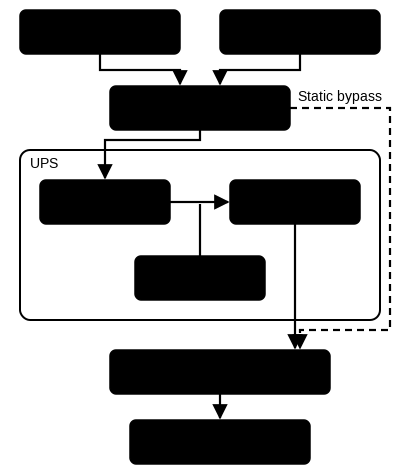
How does a data-centre UPS work?
Rectifier, battery, inverter, bypass and the modes.
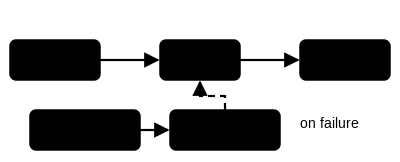
What are the types of UPS?
Standby, line-interactive, double conversion, multi-mode.
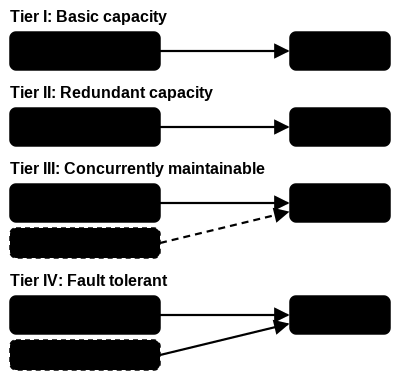
What are data center tiers?
Tier I to Tier IV and what each asks of the UPS.
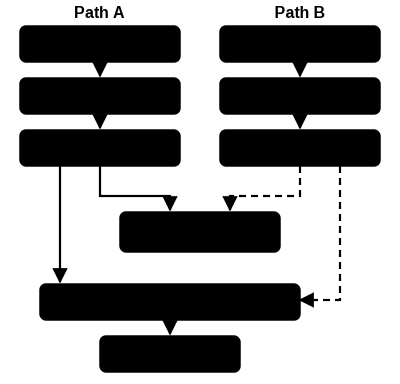
How is power delivered in a data centre?
From utility and generator to the rack.
Design
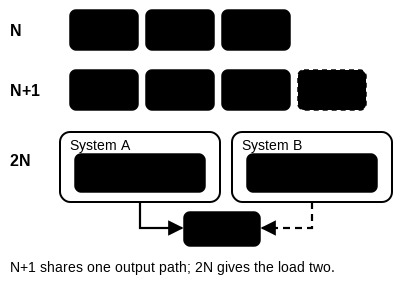
What do N, N+1 and 2N mean for a UPS?
N, N+1, 2N and what counting modules misses.
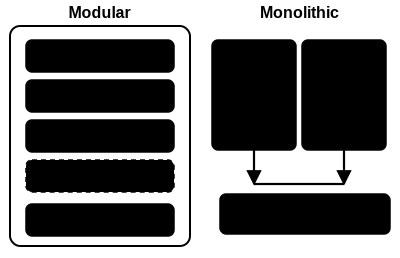
Modular vs monolithic UPS
How each is built, scaled and serviced.
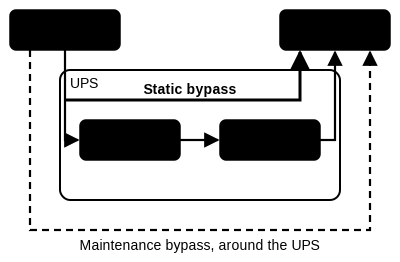
What are static bypass and maintenance bypass?
What each bypass does and when the load uses it.
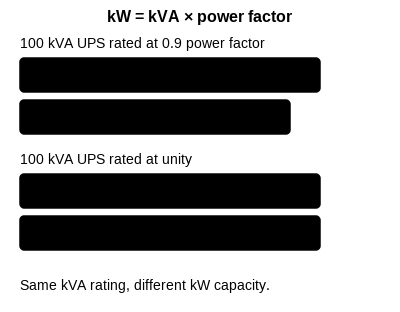
How do you size a UPS?
Load, kW and kVA, growth, redundancy and runtime.
Choose
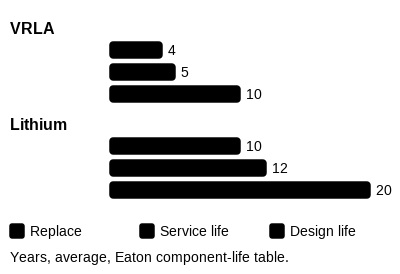
Lithium-ion vs VRLA UPS batteries
Life, footprint, temperature, cost and safety.
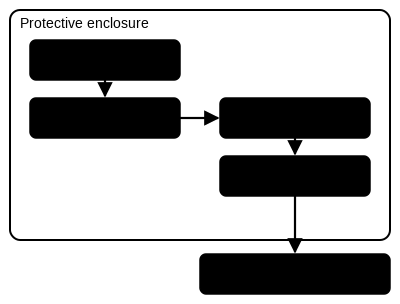
What makes an industrial UPS different?
Enclosures, temperature, isolation and service access.
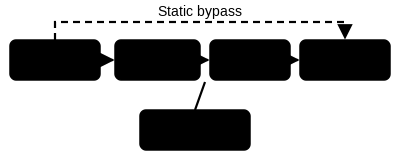
How do you choose a server room UPS?
Phase, topology, runtime and the room.
Run
How long do UPS batteries last?
Real life, temperature, charging and the signs.

How do a UPS and a generator work together?
Input window, sizing, walk-in and testing the pair.
Guides

What is an integrated systems test (IST)?
Scenarios, UPS behaviour, prerequisites and the record.
Where to start
- UPS types: types of UPS and how a data-centre UPS works.
- Designing or reviewing a site: data center tiers, power architecture and N+1 and 2N.
- Choosing a UPS: UPS sizing, modular vs monolithic and lithium-ion vs VRLA.
- Running a UPS: UPS battery life, UPS and generator and static and maintenance bypass.
Uptime Institute notes that the long-term value of a site depends on how it is operated, not only on how it was designed.
The room around the UPS
Explore power distribution, monitoring, cooling, fire protection and contamination control. Each topic connects back to the UPS and battery system.
- Power infrastructurePDUs, transfer switches, switchgear, arc flash, generators, power quality.
- Monitoring overviewUPS and battery alarms first, then the room, the software and PUE.
- Cooling overviewHeat load, equipment, airflow, density and maintenance.
- Fire protection overviewClean agents, early warning, inspection, and the UPS room.
- Cleaning overviewDust and contamination, schedule, and live-room visits.
Questions
Where do the figures in the guides come from?
From manufacturer manuals, data sheets and white papers, and from published standards. Each page lists its sources with the date they were checked.
Are the guides specific to one brand?
No. They explain principles and quote several makers; brand names identify equipment only.
Can I quote a guide?
Yes, with a link to the page.
Sources, checked 2026-10-04:
- White paper Eaton, UPS basics (white paper WP153005EN), p. 2-5
- Reference Uptime Institute, Explaining the Uptime Institute's Tier Classification System (April 2021 update)
Need a UPS serviced, tested or replaced?
Tell us the site, the UPS and the timing. We reply and quote within 4 business hours, or call 1 (438) 800-0382